Solar panels
Moving panels from the staging area to rooftops, slopes or work zones far from access roads.
 Drone 360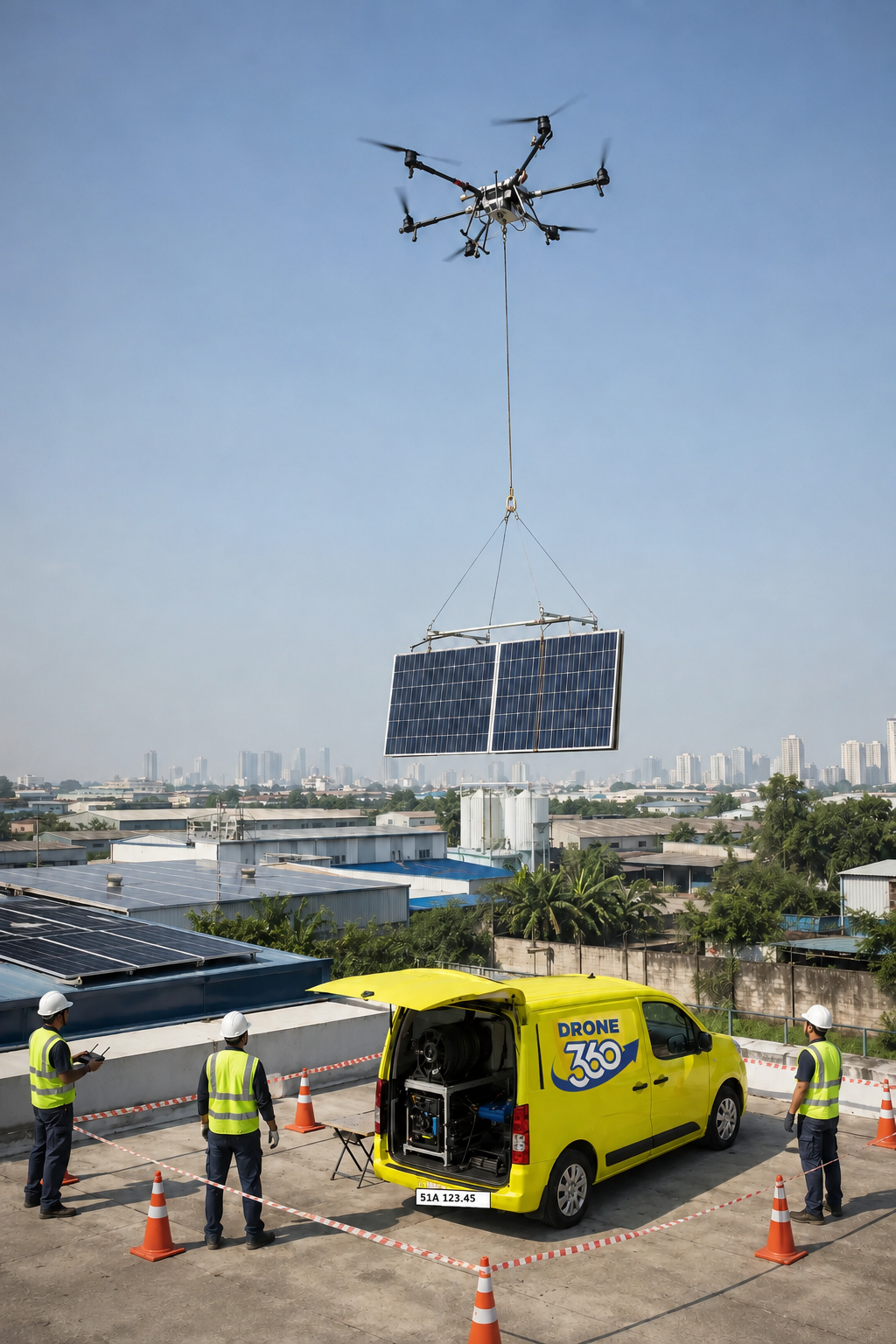
Lifting, lowering and moving solar panels, equipment and materials where cranes struggle to reach — with a fleet configured specifically for suspended loads.
The right fit when manual transport is slow, the terrain is steep or there is nowhere to place a crane. Every plan is confirmed only after the payload, flight path and safety zone survey.
Moving panels from the staging area to rooftops, slopes or work zones far from access roads.
Transporting installation equipment, accessories and materials in standardised packages.
Supporting mountain sites, isolated areas or long ground transport routes.
Lifting HVAC modules, compact steel frames and building services equipment into place.
Solar · Construction · Equipment · Difficult terrain
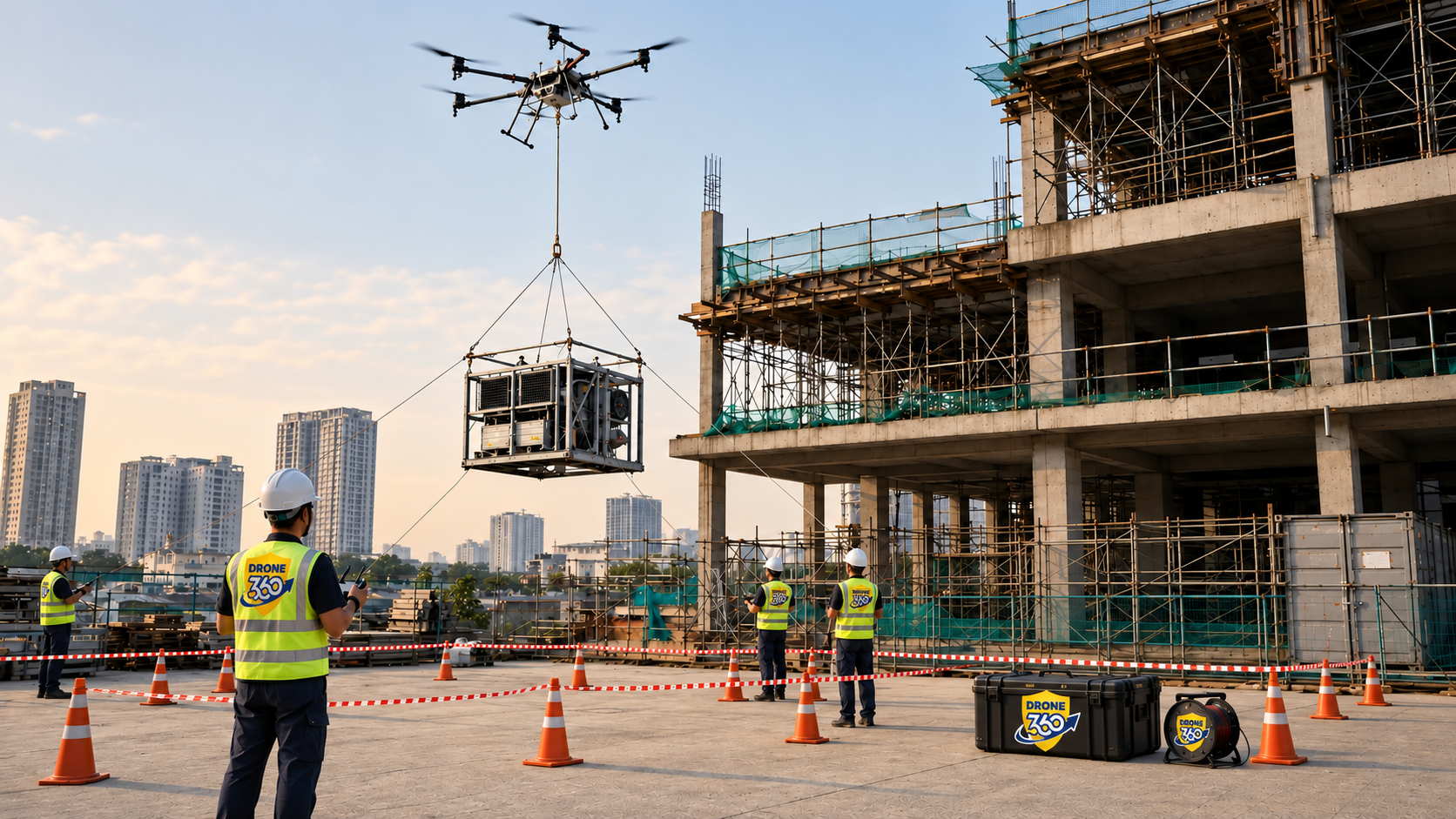
For compact loads with a known centre of gravity and lifting points, a drone can move HVAC modules, building services equipment or small components from the staging area to installation height.
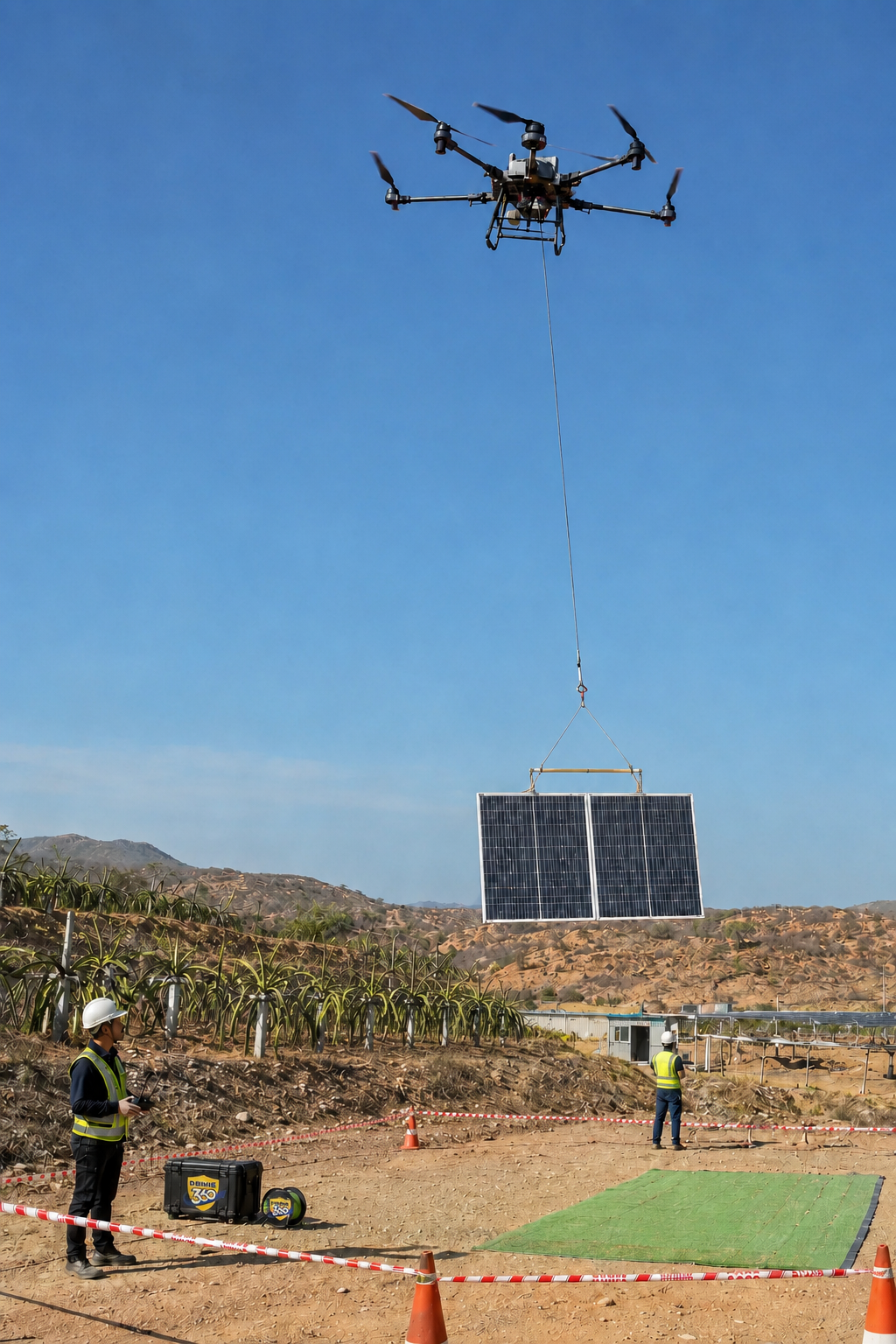
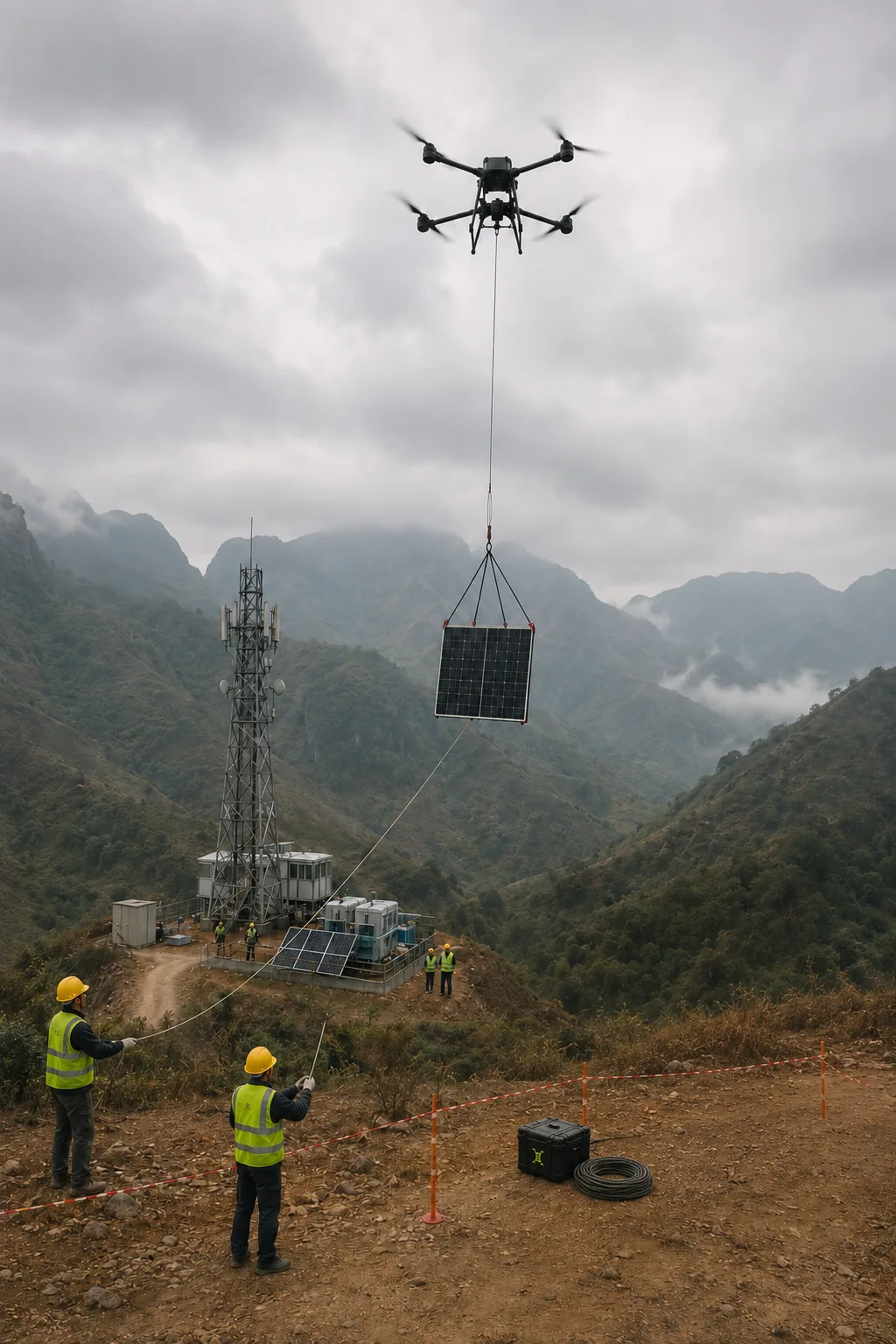
The lift drone is selected for weight, altitude, distance and wind conditions.
Slings, frames and balance points are designed around the geometry of the load.
Receiving and sending teams work under a single command channel.
Flight corridors and exclusion zones are set before every lift cycle.
Each step answers a specific risk before the load leaves the ground.
Recording dimensions, weight, lifting points and surface protection needs for each package.
↗Assessing terrain, altitude, obstacles, wind and staging areas at both ends of the route.
↗Selecting slings, frames, release mechanisms and anti-rotation setups suited to the panels.
↗Confirming the route, inter-position comms and emergency stop drills before carrying a load.
↗Moving in controlled cycles, confirming each run and recording the mission log.
↗The decision to deploy is based on real payload weight, aerodynamic stability, weather, airspace, populated areas and the ability to set up safe pick-up and set-down points.
Send photos of the packages, their weight, pick-up point, set-down point and the site address for a first assessment.